Choosing the right Indoor Isolating Switch supplier in 2026 requires more than comparing catalog prices. Electrical contractors, panel builders, and facility engineers need dependable products for controlled isolation, maintenance safety, and long service life. A supplier’s experience should appear in practical details, such as clear terminal markings, stable operating handles, strong enclosure materials, and consistent contact pressure.
This guide examines leading suppliers through product quality, technical support, manufacturing capability, and delivery reliability. It considers ratings, pole configurations, installation methods, environmental protection, and compatibility with modern low-voltage systems. Independent certifications and test documentation also matter. They help buyers verify claims instead of trusting attractive brochures.
Real projects reveal the difference.
A switch may perform well in a clean factory but struggle in a humid plant room. After-sales response can matter as much as electrical performance. Suppliers that provide drawings, wiring guidance, replacement parts, and responsive engineering support deserve closer attention. However, no ranking is flawless. Product availability changes, regional service varies, and published specifications may not reflect every application.
Readers should confirm current datasheets and local installation requirements before purchasing. The best Indoor Isolating Switch supplier is not always the largest manufacturer. It is the partner that combines verified performance, suitable customization, transparent communication, and dependable support. This review offers a practical starting point for that decision, while leaving room for careful technical judgment.
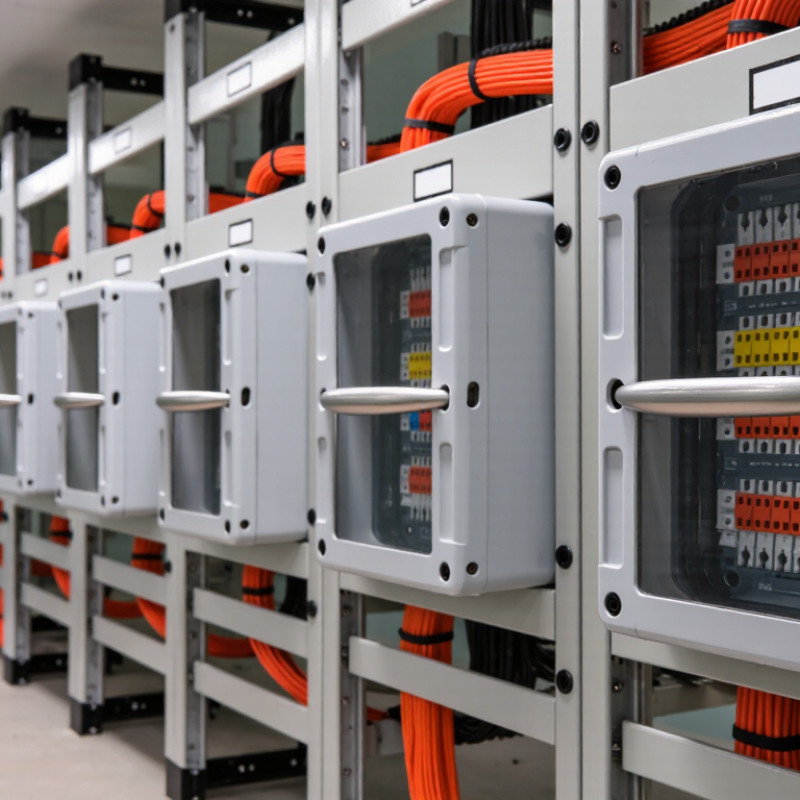
An indoor isolating switch is a manually operated device that disconnects an electrical circuit from its power source. It creates a clear separation for inspection, maintenance, or emergency access.
Unlike a circuit breaker, it is generally not designed to interrupt heavy fault current. That distinction matters. Many installation mistakes begin when users treat both devices as interchangeable.
The switch usually includes fixed contacts, moving contacts, an insulated enclosure, and a visible operating handle. When switched off, the contacts separate and reduce the risk of unexpected energization. Some models provide a lockable handle, helping prevent accidental operation during servicing.
A qualified electrician should verify the circuit is de-energized with suitable test equipment. Touching the handle alone proves nothing. Indoor units are intended for clean, protected spaces, not exposed outdoor conditions or damp industrial areas.
Selecting a suitable switch requires checking rated voltage, current, pole configuration, short-circuit conditions, enclosure protection, and installation space.
A compact distribution board may need a narrow design, while machinery can require stronger isolation and clear labeling. In practice, I would inspect terminal tightness and cable bending room before choosing a supplier.
Catalog ratings can look impressive. The installation details still decide performance. I have also seen labels become unreadable after years of heat and dust, so long-term visibility deserves attention.
The “best” supplier is not always the cheapest or most familiar; technical documentation, testing evidence, and responsive support should guide the decision.
2026 Top Indoor Isolating Switch Suppliers? How Indoor Isolating Switches Work and Where They Are Used
An indoor isolating switch creates a visible, secure gap between energized equipment and maintenance personnel. It normally operates after the circuit breaker interrupts load current. Under IEC 62271-102, disconnectors are not intended to break significant current. Their role is isolation, not routine switching. Mechanical interlocks can prevent unsafe operation. An earthing switch may then discharge trapped energy and ground the isolated section. The action feels simple, but installation errors remain possible.
These switches appear in medium-voltage substations, industrial plants, commercial buildings, rail systems, and data centers. Enclosed metal switchgear protects contacts from dust, moisture, and accidental contact. IEA’s Electricity 2024 report expects global electricity demand to grow by about 3.4% annually through 2026. That expansion increases demand for dependable distribution equipment. However, a larger market does not guarantee better safety. Engineers must match rated voltage, short-time withstand current, insulation level, operating frequency, and enclosure conditions. Indoor air quality matters more than some specifications suggest.
Tips: Confirm the isolation position visually. Test interlocks during commissioning. Check creepage distances after contamination. Keep operating handles accessible. Do not treat a disconnector as a circuit breaker. Field teams should record contact resistance and insulation results, although maintenance schedules often receive less attention than procurement. That is a weakness worth correcting.
| Switch Type | Operating Principle | Typical Voltage Range | Common Current Range | Primary Indoor Applications | Key Design Features | Relevant Standards |
|---|---|---|---|---|---|---|
| Low-Voltage Switch Disconnector | Provides a visible or mechanically indicated open circuit by separating contacts from the electrical supply. | Up to 1,000 V AC or 1,500 V DC | 16–1,600 A | Main distribution boards Control panels Motor circuits | Manual handle, load-break capability on suitable models, padlockable operating position, and optional door interlock. | IEC 60947-3; IEC 61439 when installed in a low-voltage assembly. |
| Medium-Voltage Indoor Isolator | Creates an isolation gap in a medium-voltage circuit after the circuit has been interrupted by an appropriate circuit breaker or load-break device. | Typically 3.6–36 kV | 200–3,150 A | Indoor substations Industrial feeders Transformer incomers | Fixed or withdrawable construction, mechanical position indication, earthing-switch coordination, and interlocking to prevent unsafe operation. | IEC 62271-102; IEC 62271-200 for metal-enclosed switchgear assemblies. |
| Load-Break Isolating Switch | Can interrupt specified normal load current in addition to providing electrical isolation; it is not a substitute for a fault-interrupting circuit breaker unless rated for that duty. | Up to 1,000 V AC in low-voltage systems; commonly up to 36 kV in medium-voltage systems | 63–2,500 A | Feeder sections Transformer switching HVAC systems | Arc-control system, rapid contact movement, load-break rating, and optional fuses or earth-switch assembly. | IEC 60947-3 for low voltage; IEC 62271-103 for medium-voltage switches. |
| Fused Isolating Switch | Combines switching and isolation with overcurrent protection provided by replaceable or withdrawable fuses. | Up to 1,000 V AC | 32–800 A | Motor protection Distribution feeders Commercial buildings | Fuse-link protection, shrouded terminals, door coupling, clear ON/OFF indication, and padlockable isolation. | IEC 60947-3; fuse coordination commonly follows IEC 60269. |
| Changeover Isolator | Transfers a load between two separate sources while maintaining a defined isolated position between source selections. | Up to 1,000 V AC | 40–1,600 A | Generator changeover Emergency power UPS bypass systems | Manual or motorized operation, mechanically stable source positions, source interlocking, and optional remote indication. | IEC 60947-6-1 for transfer switching equipment; IEC 60947-3 for switch-disconnector functions. |
| Earthing Switch | Connects an isolated circuit to protective earth so that stored or induced electrical energy can be safely discharged before maintenance. | Commonly 3.6–36 kV in indoor medium-voltage equipment | Rated mainly by short-time withstand current rather than continuous load current | Switchgear panels Cable compartments Transformer bays | High-speed or slow-closing mechanism, short-circuit making capability on specified models, visible position indication, and safety interlocking. | IEC 62271-102. |
| Withdrawable Switchgear Isolator | Achieves isolation by moving a circuit-breaker or switching module from the connected position to the test or disconnected position. | Typically 3.6–36 kV | 630–4,000 A | Data centers Process plants Utility substations | Shuttered primary contacts, racking mechanism, test position, service position, and key or mechanical interlocks. | IEC 62271-200; applicable circuit-breaker requirements may include IEC 62271-100. |
| Enclosed Indoor Isolator | Places the switching mechanism and live terminals inside a protective enclosure to limit accidental contact and contain installation hazards. | Up to 1,000 V AC | 20–630 A | Workshops Plant rooms Commercial facilities | Insulated or metal enclosure, cable entry provisions, external rotary handle, IP-rated construction, and optional auxiliary contacts. | IEC 60947-3; enclosure ingress protection is commonly classified under IEC 60529. |
| PV DC Isolator | Separates photovoltaic strings or arrays from inverters and other equipment under direct-current conditions. | Up to 1,500 V DC | 16–630 A | Rooftop PV Solar combiner boxes Battery-coupled PV systems | DC-rated contact spacing, polarity-specific design, arc suppression, UV-resistant enclosure options, and lockable OFF position. | IEC 60947-3 and applicable photovoltaic switching requirements under IEC 60947-1 and local installation codes. |
| Typical Selection Criteria | Selection depends on the system voltage, current, fault level, switching duty, installation category, environmental conditions, and required maintenance procedure. | Must match or exceed the system’s nominal voltage and insulation requirements. | Must match continuous load current and applicable short-time withstand requirements. | Indoor temperature Humidity Altitude Pollution level | Check isolation suitability, utilization category, terminal capacity, IP rating, creepage and clearance, interlocking, certification, and availability of replacement parts. | Always verify the latest edition of the applicable IEC, national, and local electrical installation standards. |
2026 Top Indoor Isolating Switch Suppliers?
Key Standards and Selection Criteria for 2026
For 2026 projects, an indoor isolating switch should meet IEC 60947-3 where applicable. This standard covers switch-disconnectors, their ratings, and operating duties. Check the rated operational voltage, current, short-circuit withstand, and utilization category. AC-22A and AC-23A ratings must match the connected load. A motor circuit needs different consideration from a lighting panel. Local certification may also apply, including regional safety requirements. Do not rely on a supplier’s sales description alone. Request current test reports, declarations, and clear product markings.
The enclosure deserves equal attention. IEC 60529 ingress protection ratings help confirm suitability for dust, moisture, and accidental contact. Indoor does not always mean clean or dry. Workshops, plant rooms, and humid utility spaces can expose switches to condensation and contamination. Examine insulation voltage, terminal capacity, creepage distances, and handle durability. Supplier reliability also depends on traceable production, stable documentation, sample availability, and technical support. A low price can become expensive when replacement parts or drawings are unclear. No checklist is perfect. I would still review the installation environment twice.
Tips: Ask for a complete datasheet and wiring diagram. Confirm pole configuration before ordering. Compare the declared ratings with the actual cable size and protective device. Test the operating handle during inspection. Small details matter.
Indoor isolating switch suppliers are facing stronger demand from data centers, industrial plants, and urban substations. The International Energy Agency’s Electricity Grids and Secure Energy Transitions report estimates that annual grid investment must exceed 600 billion dollars by 2030. That pressure is increasing interest in compact, dependable medium-voltage equipment.
MarketsandMarkets projects the global switchgear market will grow from about 103 billion dollars in 2023 to over 137 billion dollars by 2028. Leading suppliers therefore need more than large production capacity. They should provide tested indoor isolating switches, clear maintenance instructions, and traceable quality records. Compliance with IEC 62271-102 remains important for disconnectors and earthing switches. Buyers should also review insulation levels, mechanical endurance, temperature rise, and fault withstand performance.
Details matter. A reliable supplier can explain contact alignment tolerances, enclosure protection, and spare-part availability. Site experience helps too. A switch that performs well in a clean laboratory may struggle in a dusty factory room. That risk is easy to underestimate. Procurement teams should request type-test evidence, routine-test reports, factory inspection options, and realistic delivery schedules. Warranty language deserves careful reading. Cheap equipment can become expensive when replacement parts arrive late. I would not rank suppliers by price alone. Some product comparisons also overlook installation training and local technical support, which can affect safety and downtime.
2026 Top Indoor Isolating Switch Suppliers?
Choosing an indoor isolating switch supplier requires more than comparing unit prices. The International Energy Agency’s Electricity 2024 report expects global electricity demand to grow by about 4% annually through 2026. This pressure increases the need for dependable switching equipment and responsive technical support. I would begin with supplier experience in comparable facilities. Ask for project references, production traceability, and factory test records. A polished catalogue is not enough.
Compare products against IEC 60947-3 requirements. Check rated operational current, utilization categories, pole configuration, insulation voltage, and mechanical endurance. Confirm AC-22A or AC-23A suitability where motor or mixed loads exist. Examine enclosure protection, terminal access, labeling, and temperature-rise data. For indoor panels, IP ratings still matter, especially near dust or condensation. Independent test reports add confidence, but incomplete documents should slow the purchase.
After-sales support often separates a reliable supplier from a cheap one. Request response targets, spare-contact availability, installation guidance, and failure-analysis procedures. Ask whether serial numbers connect products to test records. That detail can save hours during a shutdown. The Uptime Institute’s data-center research repeatedly identifies maintenance and human error as major outage contributors, so training deserves a place in supplier evaluation. Price still tempts buyers. However, vague warranty terms and slow engineering replies can cost more than the switch. I would score communication, documentation, and replacement speed beside technical performance. The scoring method may still be imperfect, but visible weaknesses are easier to manage.
Recommended weighting for comparing products, suppliers, and after-sales support
Product safety and reliability receive the highest combined priority because indoor isolating switches must provide dependable circuit isolation and withstand repeated operation. Compliance documentation, delivery capability, technical support, warranty response, and total cost are also included to support a balanced supplier comparison. The percentages represent an evaluation framework rather than performance data from any specific company or brand.