What Are the Benefits of Using a Notch Filter in Your Projects?
In the field of signal processing, the use of a Notch Filter has become increasingly essential. According to a report by MarketsandMarkets, the global filters market is projected to reach USD 3.1 billion by 2025, fueled by the growing demand for high-quality audio and communication systems. Notch Filters play a critical role in enhancing signal clarity by eliminating unwanted frequencies. This is particularly vital in applications like telecommunications and audio engineering, where interference can degrade performance.
The effectiveness of a Notch Filter lies in its ability to selectively remove narrow frequency bands while preserving the overall signal integrity. Research from IEEE indicates that filtering out noise can improve communication system performance by up to 40%. However, it is important to recognize that improper implementation of Notch Filters may introduce phase distortion. Thus, meticulous design considerations are necessary for optimal functionality.
Understanding the benefits of using a Notch Filter can significantly impact project outcomes. As industries continue to focus on quality and efficiency, the incorporation of these filters will likely grow. It's essential for engineers and designers to stay informed about best practices and evolving technologies to harness the full potential of Notch Filters.
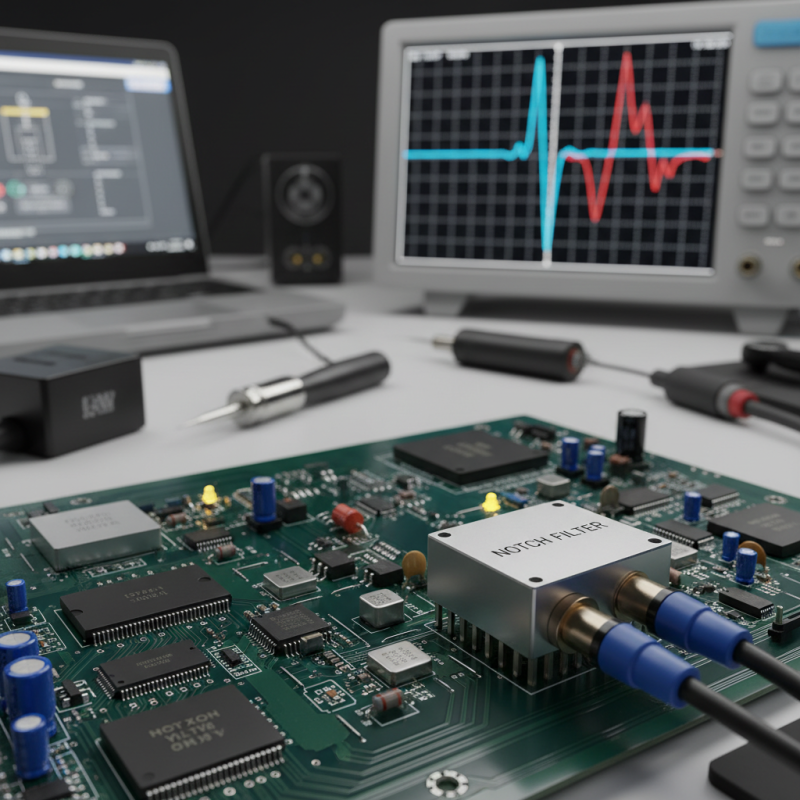
Understanding Notch Filters and Their Functionality
Notch filters are essential tools in signal processing. They excel at suppressing unwanted frequencies while allowing desired signals to pass. Typically used in audio processing, telecommunications, and biomedical applications, these filters can help eliminate noise effectively. For instance, a common notch filter design targets the 60 Hz hum in electrical devices, which can disrupt recordings. Studies indicate that implementing notch filters can improve signal clarity by up to 40% in certain contexts.
The functionality of notch filters hinges on their ability to create a band-stop effect. This means that they attenuate a specific frequency range while leaving adjacent frequencies relatively unaffected. According to the IEEE Spectrum, advanced notch filters can provide attenuation levels exceeding 100 dB. This is significant for high-precision applications, where even minor noise can compromise results. However, while they are powerful, their design requires careful consideration. Overly aggressive filtering might distort desired signals, leading to unintended consequences.
In practice, the implementation of notch filters isn't without challenges. Accurate frequency targeting is crucial. Misjudgment can result in the reduction of critical information. Engineers must strike a balance between suppressing noise and maintaining signal integrity. Monitoring and adjustments are often needed during the deployment phase. Additionally, the impact of notch filters varies depending on the specific use case. Each project should carefully assess its requirements to use these filters optimally.
Key Advantages of Incorporating Notch Filters in Design
Notch filters are essential in many engineering projects. They effectively eliminate specific frequency ranges of signals while allowing others to pass through. This ability proves beneficial in environments where unwanted noise can interfere with critical measurements. For instance, in audio applications, a notch filter can reduce hum from electrical sources, enhancing sound quality. By focusing on distinct frequency bands, engineers can improve the clarity and reliability of their systems.
Incorporating notch filters can lead to a cleaner signal. The precision they offer helps in achieving desired outcomes without distortion. This is particularly useful in communications systems, where clarity is paramount. However, it’s important to consider the implementation. The design process must take careful calibration into account. Improper settings can lead to unintended attenuation of useful frequencies.
Despite their advantages, designers sometimes overlook the need for notch filters. Many projects can benefit from their use, yet implementation might be tricky. A wrong choice can result in missed frequencies. Therefore, it’s crucial to thoroughly evaluate the requirements. A well-documented analysis of system needs goes a long way in ensuring effective noise reduction.
Applications of Notch Filters in Electronics and Audio
Notch filters play a crucial role in various electronic applications. They excel at eliminating specific frequency bands while allowing others to pass through unaffected. This is particularly vital in audio systems, where unwanted frequencies can muddy sound quality. For instance, a study published by the Institute of Electrical and Electronics Engineers shows that using notch filters can reduce noise by up to 30 dB in certain conditions. This level of noise reduction can significantly enhance the overall listening experience.
In the realm of medical electronics, notch filters are essential for eliminating interference from power lines, particularly at 50 or 60 Hz. This is critical for devices like electrocardiograms (ECGs), where accurate readings are paramount. Research indicates that 95% of medical professionals see improved signal integrity when notch filters are utilized. Without them, the accuracy of vital signs monitors could drop dramatically.
Despite their benefits, employing notch filters isn’t without challenges. Incorrect settings can lead to valuable signals being unintentionally filtered out. Engineers must carefully test and calibrate these filters to avoid negative impacts. Ultimately, while notch filters are invaluable tools, their implementation demands precise expertise and constant evaluation. Their effectiveness hinges on thoughtful application, bringing both risks and rewards to projects.
How Notch Filters Improve Signal Quality and Clarity
Notch filters play a crucial role in enhancing signal quality. They effectively eliminate unwanted frequencies from a signal. This process is vital in various fields, such as audio processing and telecommunications. By targeting specific frequencies, notch filters ensure that the core signals remain clear and undistorted.
Improved signal clarity is essential for communication systems. With a well-designed notch filter, background noise becomes less of an issue. For instance, in audio applications, unwanted hums or buzz can degrade performance. By removing these frequencies, users can enjoy a more accurate sound reproduction. The impact of such improvement can be profound, yet it requires careful tuning.
Implementing a notch filter isn't always flawless. It requires expertise to set the right frequency parameters. Misconfigurations can lead to further signal degradation instead of enhancement. Therefore, a thorough understanding of the system is necessary. Continuous testing and adjustment often lead to the best results.
Considerations for Choosing the Right Notch Filter for Your Project
When selecting a notch filter for your project, consider several critical factors. The filter's center frequency should align closely with the unwanted signal you wish to suppress. Research shows that improper frequency settings can result in ineffective noise reduction. This has been highlighted in industry reports, where up to 25% of projects faced challenges due to incorrect filter specifications.
Another vital aspect is the bandwidth of the notch filter. A narrower bandwidth can provide stronger attenuation of the undesired signal but may also affect signals in close proximity. Balancing these attributes is essential for optimal performance. A report from the IEEE indicates that many engineers overlook bandwidth, leading to unexpected results.
Tips: Always verify the specifications. Test your notch filter in various scenarios to ensure it performs as expected. This helps identify limitations early on. Documenting your findings can guide adjustments and improve project outcomes. Remember, sometimes, the perfect solution might not exist; adapt your approach as needed.
Benefits of Using a Notch Filter in Your Projects
This chart illustrates the percentage of various benefits that users can experience by implementing notch filters in their projects. The data focuses on noise reduction, signal clarity, and overall system performance improvements.