China’s residential solar market has moved from a niche choice to a major energy channel. The National Energy Administration reported that China’s cumulative photovoltaic capacity exceeded 600 GW by the end of 2023. Distributed systems represented a substantial share of that growth. The IEA Photovoltaic Power Systems Programme also identified China as the world’s largest annual PV market in its 2024 trends report.
This growth makes choosing a home solar installation company more complicated. A strong installer should offer verified equipment, trained technicians, transparent quotations, and practical after-sales support. Roof structure checks matter. So do shading analysis, inverter quality, battery safety, grid procedures, and monitoring software. A low installation price may look attractive, but weak maintenance can become expensive after the first rainy season.
This guide examines ten leading Chinese companies serving residential solar customers. The review considers market experience, manufacturing strength, project delivery, product integration, warranties, and service coverage. It also references public information from the National Energy Administration, IEA PVPS, and company disclosures. These sources provide useful evidence, although company data is not always presented in identical formats. That limits perfect comparisons.
No ranking is flawless. Regional service quality may differ between provinces, and customer experiences can change quickly. Therefore, readers should verify current certifications, installer contracts, grid requirements, and warranty terms before signing. The best provider is not automatically the largest one. It should fit the roof, budget, electricity pattern, and long-term maintenance needs of each household.
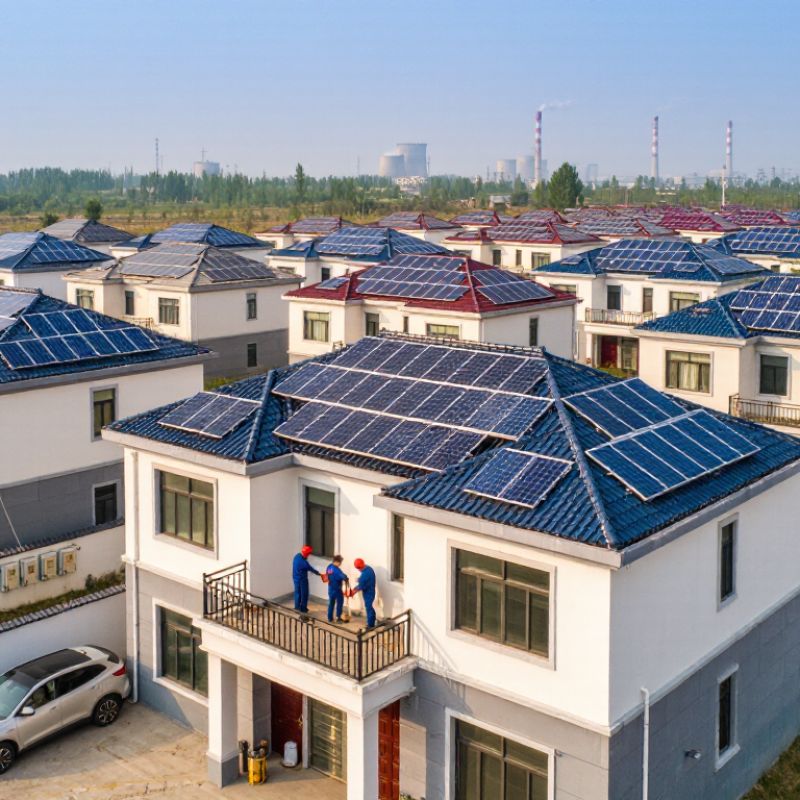
A leading home solar installation company begins with evidence, not impressive promises. Its engineers inspect roof structure, shading, cable routes, and local weather before proposing a system. They should explain expected generation in clear language, including seasonal losses and cloudy-day performance. A careful installer also checks household electricity patterns instead of selling the largest possible capacity.
Technical competence matters at every stage. Qualified workers should follow national electrical requirements, grid-connection procedures, and safe rooftop practices. They use tested inverters, secure mounting systems, suitable protection devices, and correctly sized cables. The installation should look orderly, with labeled circuits and weather-resistant connections. Small details matter.
After installation, reliable service becomes visible. Customers should receive commissioning records, monitoring access, maintenance guidance, and written warranty terms. Response times should be realistic, not vague. A trustworthy company explains which problems it handles and which require another specialist. It also protects customer data and provides a transparent contract without hidden charges.
No estimate is perfect. Roof aging, dust, storms, and changing electricity use can reduce actual returns. A professional company admits these limits and documents its assumptions. That honesty may feel less exciting, but it is more useful. In my view, the strongest installers combine field experience, qualified engineering, careful communication, and dependable support over many years.
China’s Top 10 Home Solar Installation Companies should be judged by more than installed capacity. A reliable ranking should examine certified electricians, project completion records, inverter compatibility, roof assessment, and after-sales response. The China Photovoltaic Industry Association reported 96.29 GW of new distributed photovoltaic capacity in 2023. That figure shows how quickly household and small commercial solar are expanding across China.
Installation quality varies by province. Leading providers usually offer structural checks, shading analysis, cable protection, grid-connection support, and mobile monitoring. The National Energy Administration reported 216.88 GW of newly added solar capacity in 2023, confirming strong national demand. However, capacity statistics include many project types, not only homes. This distinction is often overlooked.
A practical Top 10 selection should also compare warranty terms, replacement procedures, workmanship insurance, and local service teams. Homeowners should request a panel layout, annual production estimate, and written maintenance schedule. Look closely.
The International Energy Agency expects China to drive a major share of global renewable expansion through 2030. Yet rapid growth can expose weak site surveys and rushed installations. The ranking is not flawless. Customer reviews may reflect climate, roof design, and installer workload rather than equipment alone. A careful buyer should verify recent residential projects and inspect monitoring data before signing.
New residential distributed photovoltaic capacity in China, 2019–2023, measured in gigawatts (GW).
Comparing installers requires more than counting completed rooftops. Services differ sharply. A strong provider should offer site surveys, shading analysis, structural checks, grid paperwork, monitoring, and after-sales maintenance. The IEA PVPS Trends 2024 report recorded China’s photovoltaic capacity above 600 GW by the end of 2023. Distributed systems formed a major share, creating demand for safer, more standardized household services.
Technology choices also change project value. N-type TOPCon and heterojunction modules improve output in limited roof space. String inverters suit simpler roofs, while module-level electronics can help roofs with partial shade. Lithium iron phosphate batteries support evening use and backup loads. However, storage is not automatically economical. The installer should model household consumption, battery cycling, export rules, and winter production. The International Renewable Energy Agency reported global solar capacity reached about 1,419 GW in 2023, but rapid growth does not guarantee equal installation quality.
Installation models deserve close comparison. Turnkey EPC contracts offer one responsible party, while split procurement may reduce price but complicate warranties. Leasing and power-purchase arrangements lower upfront costs, yet contract terms require careful review. Community systems can serve households with unsuitable roofs. Practical experience suggests workmanship still matters most: cable routing, waterproofing, grounding, and fire access are easy to overlook. A ranking can mislead. Public data rarely measures failure rates, response times, or long-term maintenance quality.
China’s rapidly expanding solar market makes a “top ten” list useful, but rankings alone cannot confirm installation quality. The IEA PVPS Trends 2024 report recorded about 216.9 GW of new solar capacity in China during 2023. This scale increases choice, yet it also makes careful installer evaluation essential. Residential buyers should request a site survey, not a phone estimate.
A reliable installer measures roof orientation, shading, wind exposure, and electrical capacity. Ask for a clear design showing annual production, inverter limits, battery losses, and expected degradation. The proposal should identify equipment certifications, installation standards, workmanship coverage, maintenance duties, and grid-connection responsibilities. NREL’s PVWatts guidance also reminds users that forecasts depend heavily on local weather and system losses. A perfect output promise is a warning sign. I would still question any installer that avoids discussing roof repairs or future access.
Tips: Compare at least three itemized quotations. Check completed projects nearby. Speak with recent customers. Verify licenses, insurance, safety procedures, and complaint records. Request monitoring access and a written response time for faults. The IEA notes that quality assurance supports long-term solar performance, but paperwork cannot replace a physical inspection. Leave contingency funds for hidden cable routes, roof reinforcement, or permit changes.
| No. | Evaluation Dimension | What to Verify | Practical Benchmark | Recommended Evidence | Suggested Weight |
|---|---|---|---|---|---|
| 1 | Legal Qualification and Licensing | Confirm that the installer is legally registered and holds all licenses required for electrical, construction, and solar work in the project location. | Licenses are current, verifiable, and issued for the relevant scope of residential work. | License numbers, registration records, insurance certificates, and applicable permits. | 15% |
| 2 | Residential Solar Experience | Review the installer’s experience with roof types, local weather conditions, grid connection procedures, and residential system sizes. | A documented record of completed residential projects similar to the proposed installation. | Anonymized project portfolio, recent customer references, photographs, and completion records. | 12% |
| 3 | System Design Quality | Assess shading analysis, roof measurements, orientation, tilt, structural loading, energy consumption, and expected annual production. | A site-specific design supported by documented assumptions rather than a generic system proposal. | Single-line diagram, layout drawing, production estimate, loss assumptions, and structural review. | 14% |
| 4 | Equipment Compatibility and Safety | Check that modules, inverters, mounting hardware, protection devices, wiring, and monitoring equipment are electrically compatible. | Equipment is certified for the target market and installed according to applicable electrical and fire-safety codes. | Technical datasheets, compliance certificates, protection-device specifications, and installation method statements. | 12% |
| 5 | Installation Workmanship | Evaluate cable routing, roof penetrations, waterproofing, mounting alignment, labeling, grounding, and site cleanliness. | Clear quality-control procedures and inspection checkpoints before commissioning. | Installation checklist, quality photos, inspection report, and documented correction process. | 12% |
| 6 | Warranty Coverage | Separate equipment warranties from workmanship warranties and identify who handles claims. | Written workmanship coverage commonly spans several years; equipment terms must be checked separately because they vary by product. | Signed warranty documents, exclusions, transfer conditions, response times, and claims procedure. | 10% |
| 7 | Grid Interconnection and Permits | Confirm whether the installer manages design approval, utility applications, inspections, and permission to operate. | Responsibilities, fees, approval timelines, and customer documents are clearly defined in the contract. | Permit schedule, utility application plan, inspection responsibilities, and approval records. | 8% |
| 8 | Battery and Backup Capability | For energy-storage projects, verify usable capacity, power rating, operating temperature, backup circuits, and emergency shutdown design. | The proposal clearly distinguishes energy capacity in kWh from power output in kW and explains backup limitations. | Load schedule, battery datasheet, backup-circuit diagram, commissioning procedure, and safety documentation. | 6% |
| 9 | Financial Transparency | Compare system price, taxes, financing charges, maintenance costs, incentives, exclusions, and payment milestones. | A written, itemized quotation with no unexplained equipment substitutions or large undisclosed deposits. | Itemized contract, payment schedule, change-order policy, financing terms, and cancellation provisions. | 6% |
| 10 | After-Sales Support and Monitoring | Check system monitoring, fault alerts, service response, maintenance arrangements, and availability of replacement parts. | The customer receives monitoring access, operating instructions, handover documents, and a defined service escalation process. | Commissioning report, user manuals, monitoring credentials, service-level terms, and maintenance schedule. | 5% |
| Total Suggested Evaluation Weight | 100% | ||||
Note: Local licensing rules, grid-connection requirements, incentives, warranty terms, and technical standards vary by country and jurisdiction. All documents should be independently verified before signing a residential solar contract.
Comparing leading Chinese home solar installers requires more than checking panel prices. Request an itemized quote covering equipment, labor, wiring, scaffolding, permits, monitoring, and taxes. Ask whether roof reinforcement or difficult transport could increase the final cost. A low initial quote may exclude essential electrical work. That mistake can distort comparisons.
Warranties deserve careful reading. Separate product warranties from installation workmanship warranties. Confirm coverage periods, claim procedures, labor costs, and transfer rules if the property is sold. Reliable installers provide serial-number records and written maintenance terms. Check whether batteries, inverters, connectors, and mounting systems have separate conditions. Some promises sound broad but become narrow in the contract.
Compliance should be verified before any deposit. The installer should explain applicable Chinese standards, grid-connection requirements, fire-safety measures, and inspection responsibilities. Request evidence of qualified technicians, approved components, and completed grid applications. After-sales support matters most during a winter fault or a monitoring failure. Ask for response times, remote diagnostics, local service coverage, spare-parts availability, and escalation contacts. A practical test is simple: call support before signing. The reply may reveal more than a polished brochure.
Real projects still encounter delays. Weather, shipping, roof conditions, and utility approvals can change schedules. I would record every assumption in the contract, although I have learned that even detailed estimates need review. Expected savings also depend on household consumption, shading, and electricity rules. Claims should be checked against measured data, not enthusiasm.