
Choosing an On Grid Solar System in 2026 is less about buying the biggest array and more about matching generation to your home, roof, and electricity bill. A 6 kW system can perform very differently on a shaded roof than on a clear, south-facing one. Small details matter.
The International Energy Agency’s Renewables 2024 report projects nearly 5,500 GW of new renewable power capacity worldwide between 2024 and 2030, with solar photovoltaics accounting for the largest share of growth. That momentum makes solar options more accessible, but it does not guarantee savings for every household. Local electricity prices, export compensation, utility connection requirements, and installation quality all affect the result. The U.S. National Renewable Energy Laboratory’s PVWatts calculator also shows why location, tilt, and system losses belong in any realistic production estimate.
IEA Executive Director Fatih Birol described solar as “the new king of electricity markets around the world.” The phrase captures the technology’s rising influence, not a promise of easy returns. A careful 2026 choice should compare annual household use with expected production, check inverter capacity and warranties, and ask how the installer handles shading and grid approval. Battery storage may help where backup power matters, but it can change the project’s cost substantially. And estimates can still miss the mark. This guide explores the practical checks behind system sizing, component selection, installer review, and payback calculations, so readers can weigh attractive forecasts against the conditions on their own roof.
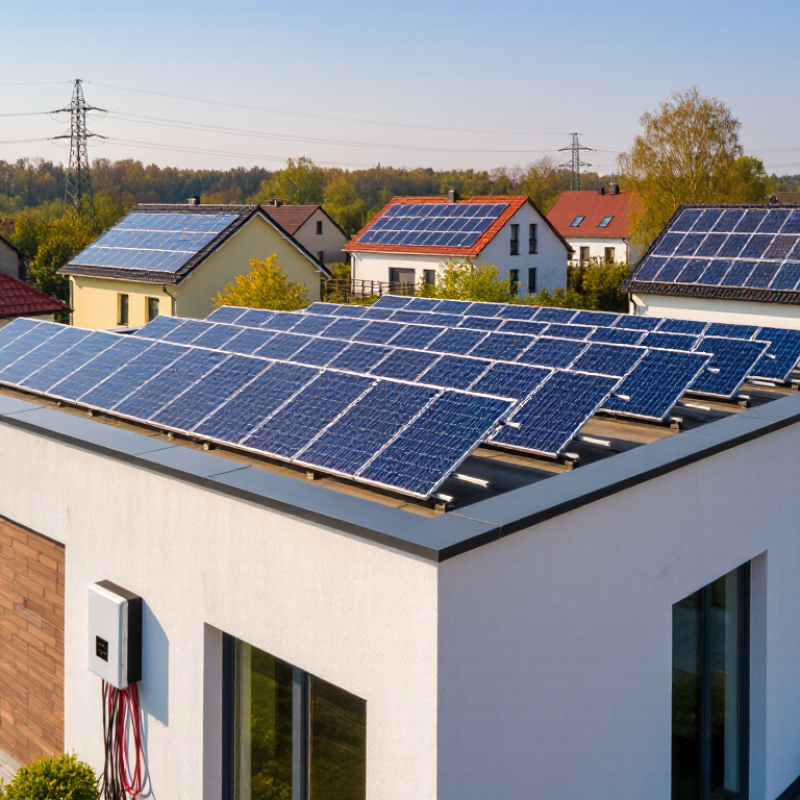
How to Choose an On Grid Solar System in 2026?
Understand How an On-Grid Solar System Works
An on-grid solar system connects rooftop panels to your home and the local electricity network. Panels produce direct current, or DC, electricity. An inverter changes it into alternating current, or AC, which household appliances use. The refrigerator keeps running. When solar production exceeds your home’s needs, the extra electricity may flow to the grid. At night or during cloudy weather, your home can draw power from the network.
A meter records electricity moving in both directions, though metering arrangements vary by location and utility. Credits for exported power are not always equal to the retail price, so check current local terms before estimating savings. The system also needs suitable panels, an inverter, safe wiring, and protection devices selected for the site. Roof shade matters. A chimney’s morning shadow can lower output more than a quick glance suggests.
One important limitation often surprises new owners: standard on-grid systems usually stop supplying power during a grid outage. This safety feature helps prevent electricity from flowing onto lines being repaired. A battery and compatible equipment may provide backup, but they add cost and change system design. Solar production also shifts by season; a bright summer afternoon cannot promise the same output in winter. Review your hourly usage, roof condition, and recent bills with a qualified installer before choosing system size. I might wish the calculations were simpler, but assumptions about export rates can age quickly.
Illustrative clear-day power profile for a 5 kW grid-connected solar array. Solar power first serves the home; surplus is exported to the grid, while a shortfall is supplied by the grid.
Values are illustrative average power levels in kW, not measured data. Positive grid exchange means electricity imported; negative values mean electricity exported. Actual solar output varies with location, weather, orientation, and season.
Start with twelve months of electricity bills, not the largest bill alone. Note monthly kilowatt-hours, seasonal peaks, and planned changes, such as adding an electric car or heat pump. An on-grid system may offset daytime use, but export credits and utility requirements vary. Ask for an estimate based on your usage pattern, not just an annual total. A yearly average can hide a poor fit. Your first estimate may be wrong; treat it as a draft, not a promise.
Inspect the roof for orientation, usable area, shade, and wear. A chimney shadow across one panel can affect output, while old roofing may need attention before installation. Ask for an on-site assessment and a clear explanation of its assumptions. Small details matter. Check that your electrical panel and service connection can accommodate the proposed system. Confirm the utility’s interconnection process, export limits, and meter requirements before settling on equipment size. A qualified installer can assess these details, but you should review the proposed design and ask questions. Measure twice. Ensure the estimate explains expected production across the year, including cloudy periods, rather than promising a fixed bill reduction.
| Assessment Area | What to Check | Useful Data or Example | How It Affects Your System |
|---|---|---|---|
| Annual electricity use | Review 12 months of electricity bills or smart-meter data. Note seasonal peaks and any planned changes, such as an electric vehicle or heat pump. | Record annual consumption in kilowatt-hours (kWh), plus typical daytime and evening use. | Annual use helps estimate a starting system size, but it does not show when electricity is consumed. |
| Daytime consumption | Identify electricity used while the solar system is producing power, including appliances, cooling, water heating, or workplace loads. | Solar production generally varies through the day and is highest around midday in suitable weather. | Using more solar electricity as it is generated can reduce imports from the grid. Electricity used at night usually comes from the grid unless storage is added. |
| Initial system-size estimate | Compare annual consumption with a local estimate of annual solar generation per installed kilowatt-peak (kWp). | Illustrative example: 4,000 kWh of annual use ÷ 1,200 kWh per kWp per year ≈ 3.3 kWp. | This is a preliminary estimate, not a final design. Local solar yield, roof orientation, shading, export limits, and self-consumption can change the suitable size. |
| Local solar resource | Ask for a location-specific estimate using local weather data, roof orientation, tilt, and shading. | Annual output can vary substantially by location and site; a broad planning range in many regions is approximately 1,000–1,700 kWh per kWp per year. | Use a local estimate rather than applying a single national or global production figure to every roof. |
| Roof area | Measure usable, unobstructed roof space and allow for access paths, roof edges, vents, skylights, and local fire or building requirements. | A rough planning allowance is about 5–7 m² of roof area per kWp, depending on module size and layout. | Usable area may be more important than total roof area. A site layout is needed to confirm how many modules can fit safely. |
| Roof direction and tilt | Check the direction each roof plane faces and its slope. In the Northern Hemisphere, south-facing roofs often have strong annual production; in the Southern Hemisphere, north-facing roofs often do. | East- and west-facing arrays can produce useful electricity, often with production shifted toward morning or afternoon. | Orientation changes the timing and amount of generation. The best layout depends on local conditions and the household’s electricity-use pattern. |
| Shading | Check for shade from trees, chimneys, nearby buildings, and roof features throughout the year. | Shading can reduce output, and its effect depends on how much of the array is shaded and the system design. | Request a shade assessment. Module-level power electronics may help in some layouts, but they do not remove the energy lost when sunlight is blocked. |
| Roof condition and remaining life | Inspect the roof structure, covering, waterproofing, and any planned repairs before installation. | Consider whether roof work is likely during the expected service life of the solar equipment. | Repair or replace an unsuitable roof before installation where practical, to avoid the added work of removing and reinstalling panels. |
| Grid connection and export rules | Ask the local utility or distribution network operator about connection approval, export limits, metering, and required protection settings. | Permitted export capacity and connection requirements vary by location, network, and property. | Do not assume that all surplus generation can be exported. Approval or a specified export limit may affect system size and inverter configuration. |
| Electrical supply and inverter | Confirm whether the property has a single-phase or three-phase supply and check the existing switchboard and service capacity. | Inverter type and rating must be compatible with the array, the property’s electrical supply, and local connection rules. | A qualified designer or installer should confirm compatibility and any required switchboard or electrical upgrades. |
| On-grid operation and backup | Decide whether you only want to reduce grid electricity use or also need power during a grid outage. | Most standard grid-connected systems shut down during a grid outage for safety unless designed with approved backup equipment and suitable storage. | An on-grid solar system alone should not be treated as backup power. Ask specifically about outage operation if backup is important. |
| Quotation comparison | Compare system capacity, estimated annual generation, equipment specifications, installation scope, warranties, and connection assumptions. | Check whether the estimate states its assumptions for shading, roof orientation, export limits, and electricity tariffs. | Compare like-for-like designs and verify that the proposed system can be connected under the applicable local rules. |
Start with twelve months of electricity bills, not the roof’s maximum panel count. Find your average daily use in kilowatt-hours, then note seasonal changes. A winter bill may reveal more than a yearly average if heating drives demand. Check the roof’s usable area, direction, tilt, and shade at different times of day.
For a rough estimate, divide daily energy use by peak-sun hours and a system performance factor. For example, a home using 24 kWh per day, with 4.5 peak-sun hours and a factor of 0.8, would need about 6.7 kW of panels. This is only a planning estimate. Local weather, roof angle, wiring losses, and module temperature all affect output. Shading matters. Even a chimney shadow can reduce production, depending on the array layout.
Compare the estimate with local solar-production data, ideally month by month. Ask a qualified installer to assess the roof and explain assumptions behind the forecast. An on-grid system usually sends excess power to the grid, but the value of exported energy depends on your utility arrangement. Size the system around realistic daytime use and expected exports, not an idealized annual figure. One estimate may still miss your habits; that uncertainty is worth checking before choosing a system.
Choosing an on-grid solar system in 2026 starts with matching equipment to your roof, electricity use, and utility requirements. Compare panels by rated output, temperature performance, degradation rate, and warranty—not wattage alone. A 430-watt panel may look stronger on paper, but chimney shade can change the real result. Ask for a roof layout showing shade and estimated yearly production. Estimates are estimates.
Inverter choice affects monitoring, expansion, and performance in shade. String inverters can suit roof sections with similar sunlight; module-level electronics may help when panels face different directions or experience partial shade. Check efficiency, operating temperature range, monitoring access, and warranty terms. Grid-tied systems generally shut down during an outage unless designed with suitable backup equipment. This surprises people.
Installer credentials deserve equal scrutiny. Request proof of relevant qualifications, insurance, and recent local references. Ask who handles permits, utility interconnection, inspections, and service calls. Compare written proposals using the same assumptions for panel count, inverter type, annual production, and exclusions. Verify workmanship coverage and what happens if the installer closes. A polished quote does not prove careful work. Ask the installer to explain one limitation, not only the expected savings. If the answer feels vague, pause and compare another proposal.
How to Choose an On Grid Solar System in 2026?
Compare quotes using the same system size and equipment scope. Check whether each price includes permits, grid connection, monitoring, and any roof repairs. Estimate savings from your daytime electricity use, not just the system’s total annual output. Export payments and connection limits vary by location and utility, so verify current terms before relying on projected income. Incentives may have eligibility rules or application deadlines. Confirm them with an official energy agency or qualified local installer. A low upfront price can still leave costly gaps.
Tips: Ask for itemized quotes. Get export assumptions in writing. Check the fine print.
Review warranties separately: panels, inverters, and installation workmanship may have different coverage periods and exclusions. Ask who handles service if the installer closes, and whether labor or removal costs are covered. Also check that the proposed system matches your roof’s shade, orientation, and available grid capacity. A larger array is not automatically better if exports are restricted. It is easy to focus on headline savings; I would revisit that estimate after checking a recent bill and realistic export rates. The result may be less exciting, but more useful.