2025 How to Choose the Best Solar Panels for Your Home
As the push for sustainable energy intensifies, homeowners are increasingly turning to sun solar panels as a viable source of clean energy. According to Dr. Emily Carter, a leading expert in renewable energy systems, “The integration of solar technology in residential settings not only reduces energy costs but also contributes to a more sustainable future.” With a growing array of solar panel options available in the market, choosing the best solution for home use can be both exciting and overwhelming.
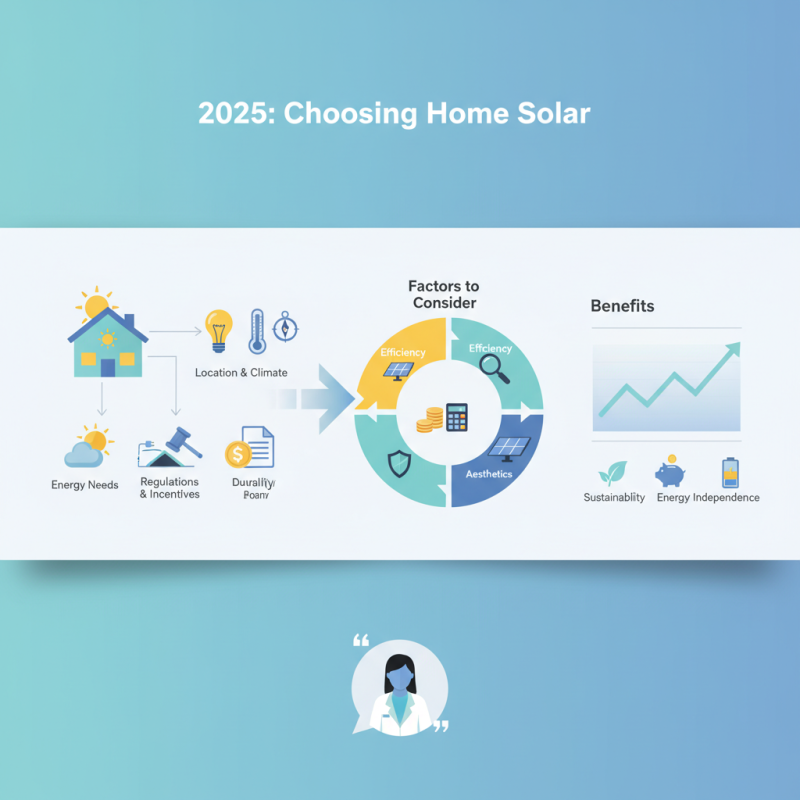
When considering sun solar panels, it's essential to understand the various factors that influence performance, efficiency, and installation. Homeowners must evaluate their specific energy needs, the geographical advantages of their location, and local regulations that may impact their solar energy system. As experts like Dr. Carter emphasize, making an informed decision can lead to significant long-term savings and environmental benefits. This guide aims to navigate through the key considerations for selecting the ideal solar panels, ensuring that your investment contributes to a cleaner planet while meeting your household energy requirements.
Understanding Solar Panel Types: Monocrystalline, Polycrystalline, and Thin-Film
When it comes to choosing the best solar panels for your home, understanding the different types is crucial. The three main types of solar panels—monocrystalline, polycrystalline, and thin-film—each have unique characteristics that may influence your decision. According to a report by the National Renewable Energy Laboratory (NREL), monocrystalline panels are known for their high efficiency rates, typically ranging from 15% to 22%. These panels are made from single-crystal silicon, which allows for a more efficient absorption of sunlight, making them ideal for homeowners with limited roof space.
On the other hand, polycrystalline panels, which comprise multiple silicon crystals, tend to have slightly lower efficiency ratings, around 13% to 16%. These panels are generally more affordable, making them a popular choice for those looking to reduce upfront costs while still enjoying the benefits of solar energy. Thin-film solar panels offer the lowest efficiency, typically between 10% and 12%, but they are lightweight and flexible, allowing for easier installation on various surfaces. According to a recent Market Research Future report, the demand for thin-film panels is expected to grow as advancements in technology drive down production costs and increase their performance.
When selecting solar panels, it’s essential to balance efficiency, cost, and available installation space. The choice you make can significantly impact your home’s energy savings and overall environmental footprint. By carefully evaluating the pros and cons of each panel type, you can make an informed decision that best aligns with your energy needs and sustainability goals.
Evaluating Solar Panel Efficiency Ratings and Performance Metrics
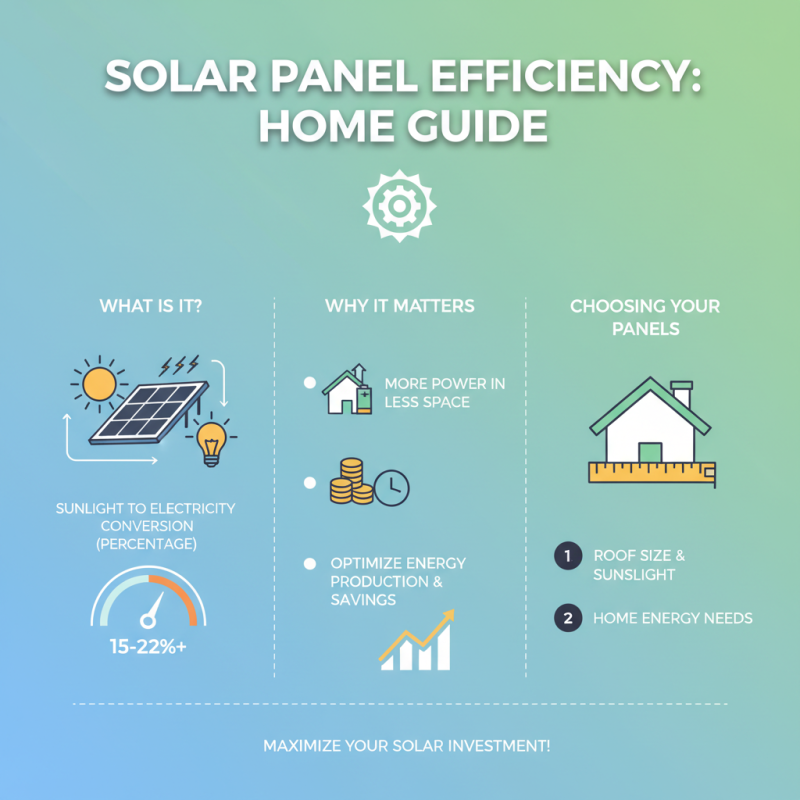
When selecting solar panels for your home, understanding efficiency ratings is crucial for optimizing energy production. Solar panel efficiency refers to the percentage of sunlight converted into usable electricity. Typically, efficiency ratings range between 15% to over 22%. Higher efficiency panels generate more electricity in a smaller space, making them ideal for homes with limited roof area. It’s essential to consider your energy needs and the available installation space when evaluating these ratings.
In addition to efficiency, performance metrics such as temperature coefficients and degradation rates play a significant role in determining a panel's reliability over time. The temperature coefficient indicates how well a panel performs in higher temperatures; a lower coefficient is preferable, as it means the panel will lose less efficiency in heat. Meanwhile, the degradation rate reveals how much the panel’s output will decline over the years. Most high-quality panels guarantee less than 1% degradation per year, ensuring that they retain a significant portion of their efficiency and performance throughout their lifespan. These factors together will help ensure that your investment in solar energy is not only effective but also sustainable in the long term.
Considering Your Energy Needs: How to Calculate Solar Requirements for Your Home
When determining the solar requirements for your home, the first step is to accurately assess your energy consumption. An average American household consumes about 877 kWh per month, which translates to roughly 10,500 kWh annually. By analyzing your electricity bills over the past year, you can gather data on your monthly consumption patterns, allowing you to estimate the total energy needs for your home. This number will serve as the baseline for calculating the size and capacity of the solar panel system you'll need to offset your electricity costs effectively.
Once you have a clear picture of your annual energy consumption, the next step is to consider the solar insolation of your location. Solar insolation, measured in kWh/m²/day, varies widely depending on geographical region, weather patterns, and seasons. According to the National Renewable Energy Laboratory (NREL), areas with high solar insolation can produce over 6 kWh/m² per day, while regions with less sunshine may generate significantly less. By combining your home's energy consumption data with local solar insolation figures, you can estimate the number of solar panels required to meet your needs. Generally, a typical solar panel produces around 300-400 watts of power; thus, you can determine how many panels you'll need to generate enough energy to not only cover your consumption but also to account for system inefficiencies, which can be as high as 20%.
2025 Solar Panel Efficiency vs. Cost
This chart represents the efficiency and cost of various solar panels. The blue bars indicate the efficiency percentage of each panel, while the red line shows their corresponding cost per watt. Choosing the right solar panel involves considering both efficiency and cost to meet your energy needs effectively.
Assessing Budget and Financing Options for Solar Panel Installation
When considering the installation of solar panels for your home, one of the most significant factors is determining your budget and exploring financing options. Solar panel systems can vary widely in price, depending on factors such as size, type of panel, and installation complexity. It is essential to establish a clear budget that aligns with your financial situation and long-term energy goals. Take into account not merely the upfront costs but also potential savings on your energy bills over time, as well as any available tax incentives that can offset initial investments.
Financing options are crucial for making solar panel installation more accessible. Homeowners have various choices, including purchasing panels outright, taking out a personal loan, or opting for a solar lease or power purchase agreement (PPA). Each option has its pros and cons; for instance, purchasing can lead to long-term savings and increased home value, while leasing might allow for lower initial costs without the burden of upfront payments. Additionally, some local governments or utility companies offer special financing programs or rebates to encourage solar adoption, providing you with more avenues to reduce overall costs. Evaluating these options carefully will help ensure that your solar energy investment is both financially sound and sustainable for the future.
2025 How to Choose the Best Solar Panels for Your Home - Assessing Budget and Financing Options for Solar Panel Installation
| Solar Panel Type |
Efficiency (%) |
Cost per Watt ($) |
Average Lifespan (years) |
Incentives Available |
| Monocrystalline |
22 - 24 |
$2.50 - $3.50 |
25 |
Federal Tax Credit, State Incentives |
| Polycrystalline |
15 - 20 |
$1.90 - $2.90 |
25 |
Federal Tax Credit, Local Grants |
| Thin-Film |
10 - 12 |
$1.00 - $2.00 |
20 |
State Financial Incentives |
| Bifacial |
20 - 22 |
$2.75 - $4.00 |
30 |
Increased Federal Tax Credit |
Researching Warranty and Maintenance for Long-Term Solar Panel Investment
When selecting solar panels for your home, understanding the
warranty and
maintenance aspects
is crucial for ensuring a long-term and reliable investment.
According to the National Renewable Energy Laboratory (NREL), the
lifespan of solar panels typically ranges from
25 to 30 years,
but not all manufacturers offer the same level of assurance.
It’s vital to look for warranties that cover significant components,
including power output and workmanship. A common standard is a
25-year power output warranty,
which guarantees that the panel will produce a certain percentage
of its rated power over time. This serves as a strong indicator
of reliability and performance longevity.
Maintenance is another key consideration in your solar panel investment.
The Solar Energy Industries Association (SEIA) suggests that while solar panels
generally require minimal maintenance, regular inspections and cleaning may be
necessary to maximize efficiency. Dust,
debris, or snow accumulation can hinder a solar panel’s performance, potentially
reducing energy output by up to 20%.
Therefore, homeowners should develop a routine to check for any debris or obstructions
and consider professional cleaning services if necessary. With proper maintenance
combined with a robust warranty, you can enhance the return on your investment,
ensuring your solar system operates optimally for decades.