How to Choose the Right Electric Quadricycle?
Choosing the right Electric Quadricycle requires more than comparing battery size or showroom prices. It means matching the vehicle with real daily conditions: narrow streets, steep driveways, winter temperatures, and limited parking space. A compact model may feel perfect in a city centre, yet become frustrating on longer commutes. Range matters, but charging access matters more.
Horace Dediu, a widely cited micromobility analyst, has said, “Micromobility is the future of transportation.” His observation helps explain why Electric Quadricycles are gaining attention. They occupy a practical space between bicycles and conventional cars. However, the category is still developing. Specifications can be confusing. Marketing claims may also sound better than everyday performance.
This guide examines the details that deserve careful attention. We will consider battery capacity, usable range, charging time, cabin protection, seating comfort, safety equipment, and after-sales support. A test drive should include tight turns, uneven roads, and repeated stops. Notice the details. Can the doors close easily? Is the steering comfortable after thirty minutes? Does the vehicle remain stable when carrying groceries or another passenger?
There is no perfect choice. Not yet. A buyer may accept slower acceleration for lower running costs. Another may prefer stronger weather protection, even with less interior space. The best Electric Quadricycle is the one that fits your route, climate, budget, and charging habits. Careful evaluation prevents an attractive purchase from becoming an expensive compromise.
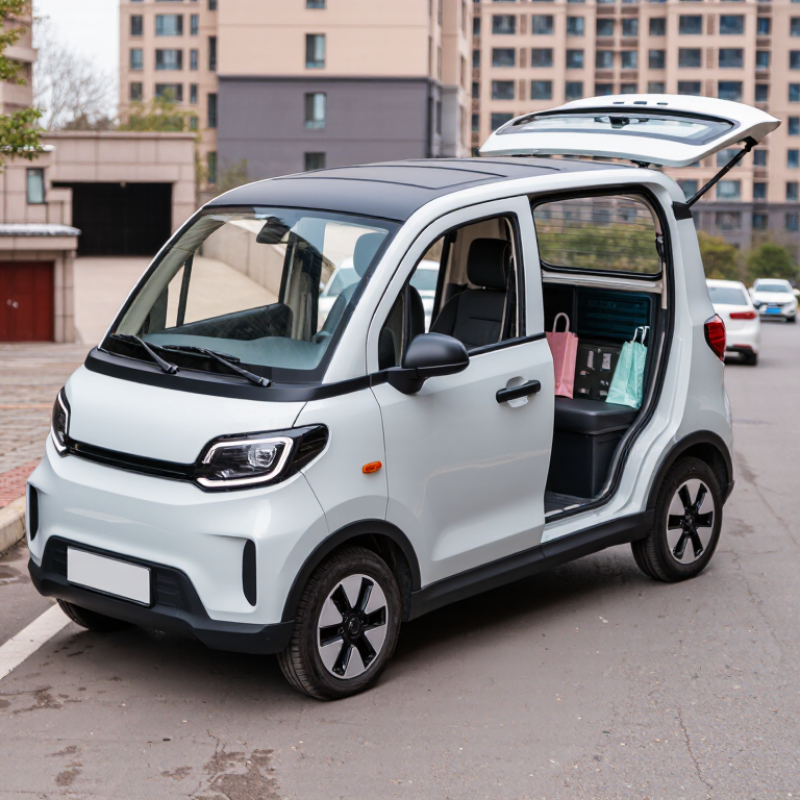
Electric Quadricycle Types and Their Intended Uses
Electric quadricycles are not one single vehicle class. Their designs reflect different daily jobs, road conditions, and passenger needs. Light quadricycles suit short urban trips, especially where narrow streets and modest speeds matter. They usually carry one or two people and limited luggage. An enclosed cabin adds shelter from rain, but small batteries still demand realistic route planning. Think local errands, not long motorway journeys.
Heavier quadricycles offer stronger frames, larger batteries, and better payload capacity. They can serve commuting, campus transport, or controlled business sites. Cargo versions replace rear seating with a flat deck or enclosed box. They work well for tools, groceries, and maintenance supplies, provided the load stays balanced. Passenger models prioritize seating, step-in height, visibility, and easy controls. For users with limited mobility, low access points and stable seating may matter more than acceleration. Classification and equipment rules differ by country, so verify local requirements before purchase.
Real experience matters more than a glossy specification sheet. Measure your daily route, steepest hill, parking space, and charging access. Test the vehicle with its normal passengers or payload. Check braking feel, turning radius, cabin ventilation, lighting, and weather protection. Ask who handles battery service and parts support. I would not choose by range alone; cold weather, hills, and heavy loads reduce usable distance. A quadricycle can feel perfect in a showroom and awkward on a wet, crowded street. That uncomfortable test is useful.
Safety, Licensing, and Legal Requirements
Choosing the right electric quadricycle starts with local law, not styling or battery range. Legal categories differ by country and sometimes by speed or vehicle weight. A model permitted on urban streets may be restricted from motorways or high-speed roads. Check the transport authority’s current classification before paying a deposit. Ask for written specifications covering maximum speed, mass, seating, lighting, braking, and safety equipment. Do not rely on verbal promises alone.
Safety should be tested in realistic conditions. Sit inside and check visibility around thick pillars, door locks, mirrors, and belt positions. During a supervised drive, test braking on dry pavement and notice stability during a slow turn. Small wheels can react sharply to potholes. Confirm whether the vehicle requires a motorcycle, moped, or car licence. Requirements may include registration, insurance, inspection, minimum age, and helmet use. Rules change. Online forums can be outdated.
Tips: Keep a folder with the vehicle certificate, insurance details, licence information, and inspection records. Ask the authority whether the quadricycle may use your regular route. Measure your parking space, including the charging area. I would also check emergency access around the vehicle. That detail is easy to overlook. Before signing, compare the official requirements with the seller’s documents. If anything conflicts, pause and investigate.
Battery Range, Charging, and Operating Costs
How to Choose the Right Electric Quadricycle?
Battery Range, Charging, and Operating Costs
Battery range looks simple until daily conditions change. A quadricycle advertised with 100 kilometres of range may travel less in cold weather, heavy rain, or hilly streets. The International Energy Agency’s Global EV Outlook 2024 reports that real-world efficiency depends strongly on vehicle size, speed, temperature, and heating demand. Therefore, compare usable battery capacity, not only the claimed distance. A 15 kWh battery using 12 kWh per 100 kilometres could theoretically cover 125 kilometres. Allowing a practical 20% reserve reduces that figure to about 100 kilometres.
Charging access matters more than peak charging speed for many urban users. The U.S. Department of Energy’s Alternative Fuels Data Center explains that charging time depends on power output, battery condition, and onboard equipment. A 2.3 kW household connection may need several hours for a small battery. A 7 kW connection can shorten the wait, but installation costs vary. Check the cable length, socket location, and overnight electricity tariff. Small details matter.
Operating cost calculations should include charging losses, maintenance, insurance, tyres, and battery ageing. If electricity costs 0.18 dollars per kWh, consuming 12 kWh per 100 kilometres costs about 2.16 dollars before charging losses. Add roughly 10% for energy lost during charging. This is still only an estimate. My own route planning would test the vehicle over a week, including a cold morning and a fully loaded trip. Laboratory figures can mislead. A spreadsheet cannot reproduce every traffic light, detour, or winter heater use.
How to Match a Quadricycle to Your Daily Needs
How to Choose the Right Electric Quadricycle?
Daily needs should guide the choice more than appearance. Start with your real routine. Measure the morning route, passenger needs, parking space, and typical cargo. A compact quadricycle may suit short urban trips, narrow streets, and simple home charging. It may feel limiting on faster roads. Check its permitted road category and local access before buying. The European Environment Agency reported that passenger cars produced about 60% of European road transport emissions in 2022. Smaller electric vehicles can reduce energy use, but only when they replace suitable car journeys. They are not a universal answer. The IEA’s Global EV Outlook 2024 recorded more than 17 million electric car sales worldwide in 2023, showing stronger charging and service infrastructure. Quadricycles still need careful planning.
Tips: List your weekly trips. Record the longest distance. Keep a 30% battery buffer for cold weather, hills, and detours. Check whether a standard household socket works safely. Measure the parking bay twice. Test entry, visibility, seat comfort, and storage with your actual passenger. A brochure cannot show everything.
Think about weather, too. A warm cabin may matter more than extra speed. If two adults travel daily, test shoulder room and door access. If you carry groceries, bring the largest bag you normally use. My first instinct would be to choose the smallest model. That choice can be wrong. Limited storage may create extra car trips, weakening the environmental benefit. The IEA also reported over four million public charging points globally at the end of 2023, yet local availability varies widely. Count nearby chargers, then plan around your home routine.
How to Choose the Right Electric Quadricycle?
Match the vehicle class to your daily needs by comparing speed, driving range, and usable payload.
Light quadricycles are generally suited to short urban trips and lower operating speeds. Heavy quadricycles offer greater carrying capacity and longer-distance flexibility. Figures are indicative, non-brand specifications; actual performance depends on battery size, load, weather, terrain, and local regulations.