Why Choose Solar Electricity for Your Home? Top Benefits & Savings Explained
As the quest for sustainable energy solutions intensifies, more homeowners are turning to solar electricity for home use. This renewable energy option not only aligns with environmental goals but also offers substantial benefits that can significantly impact your household's finances. With the increasing efficiency of solar technology and various incentive programs, switching to solar electricity is becoming an increasingly attractive proposition.
Understanding the advantages of adopting solar electricity for home consumption is vital for anyone considering this transition. From reducing monthly utility bills to enhancing property value, the benefits stretch far beyond mere energy savings. Furthermore, the positive environmental impact of harnessing solar energy can contribute to a cleaner and healthier planet for future generations. This article will delve into the top benefits and potential savings associated with solar electricity for home applications, empowering you to make an informed decision about your energy choices.

Benefits of Solar Electricity for Homeowners
The transition to solar electricity presents a range of compelling benefits tailored for homeowners. One significant advantage is the potential for substantial savings on energy bills. According to the U.S. Department of Energy, homeowners can save between $10,000 and $30,000 over the lifespan of a solar panel system, depending on local energy rates and financial incentives. Additionally, solar energy systems can significantly increase property value—research from Zillow indicates that homes with solar installations sell for about 4.1% more on average than comparable homes without solar.
Another critical benefit is the positive environmental impact of harnessing solar power. The Environmental Protection Agency (EPA) states that the use of solar energy can reduce greenhouse gas emissions significantly, helping to combat climate change. By reducing reliance on fossil fuels, homeowners contribute to cleaner air and a healthier community.
**Tips:** When considering solar, assess your home's energy consumption to determine the appropriate system size. Additionally, exploring state and federal incentives can enhance your savings. Lastly, compare multiple solar installers to find the best pricing and warranty options available.
Why Choose Solar Electricity for Your Home? Top Benefits & Savings Explained
The following chart illustrates the estimated annual savings and benefits of switching to solar electricity for homeowners. The data highlights key advantages such as reduced electricity bills, tax credits, and environmental impact.
Cost Savings: How Solar Panels Lower Your Energy Bills
Installing solar panels in your home can lead to significant cost savings on energy bills. By harnessing the power of the sun, homeowners can generate their own electricity, reducing reliance on grid energy. This transition not only helps in decreasing monthly utility costs but can also provide a buffer against rising energy prices. When solar panels are installed, any excess energy produced can often be fed back into the grid, allowing homeowners to earn credits or offset future charges, further enhancing savings.
Moreover, many regions offer incentives for solar installation, such as tax credits, rebates, or grants that can alleviate the initial investment costs. These financial incentives, combined with the long-term savings on energy bills, make solar a financially sound choice. Additionally, solar panels typically have low maintenance costs and can lead to increased property value, making them an attractive investment for homeowners looking to enhance their financial standing while contributing to environmental sustainability.
Environmental Impact: The Positive Effects of Solar Energy
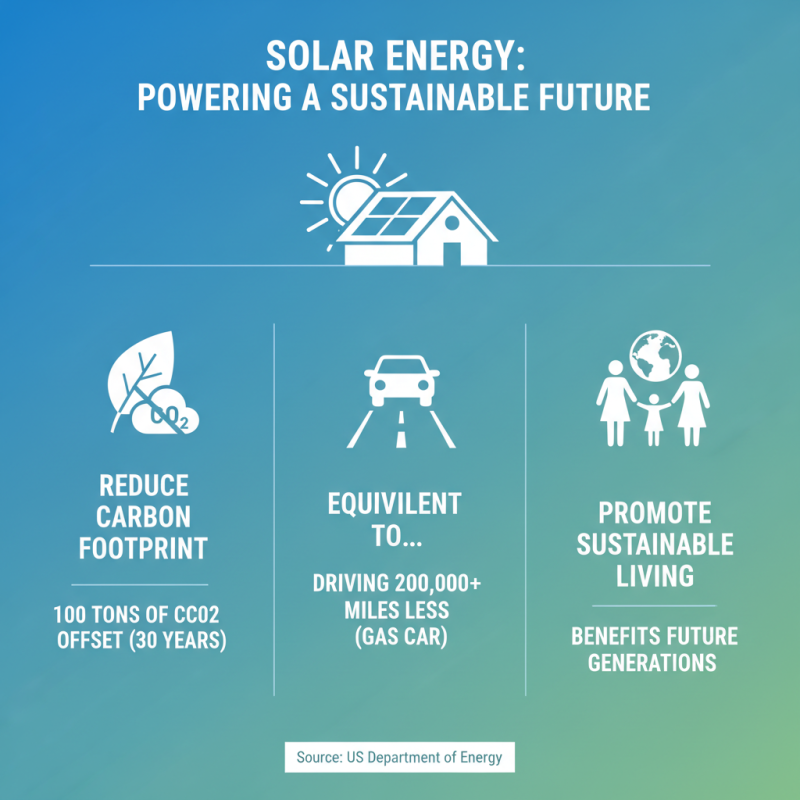
Solar energy has emerged as a viable solution to one of the most pressing global challenges: climate change. By harnessing the sun's power, households can significantly reduce their carbon footprint. According to the U.S. Department of Energy, a typical residential solar panel installation can offset nearly 100 tons of carbon dioxide over its 30-year lifespan. This is equivalent to eliminating the emissions produced by driving a gasoline-powered car for more than 200,000 miles. The shift towards solar electricity not only benefits the environment but also promotes sustainable living for future generations.
In addition to reducing greenhouse gas emissions, solar power contributes to lower air pollution levels. The American Lung Association reports that transitioning to renewable energy sources like solar could prevent over 3,000 premature deaths annually by reducing air pollutants such as sulfur dioxide and nitrogen oxides. Opting for solar energy is not just a matter of personal or financial gain; it's a commitment to a healthier environment.
Tip: To maximize the benefits of solar energy, consider conducting an energy audit of your home. This will help identify areas where you can improve energy efficiency, further amplifying your solar power savings.
Another advantage of solar energy is its ability to promote energy independence. By generating your own electricity, you reduce reliance on fossil fuels and mitigate the effects of fluctuating energy prices. The National Renewable Energy Laboratory estimates that solar energy could provide over 30% of the electricity supply in the United States by 2030, leading to more stable energy markets and a significant reduction in dependence on imported fuels.
Tip: Look into financing options such as solar loans or leasing programs that can make adopting solar technology more accessible and manageable for your budget.
Increasing Home Value: Solar Panels and Real Estate Appeal
Investing in solar electricity not only contributes to a sustainable future but also significantly enhances the appeal of your home in the real estate market. Homes equipped with solar panels are increasingly attractive to potential buyers due to the rising interest in renewable energy solutions.
Solar energy systems can reduce utility bills, and this financial liberality is a compelling selling point. Buyers looking for eco-friendly options often prioritize homes with solar investments, seeing them as a long-term asset that aligns with their values.
Tips for homeowners: Highlight your solar installation when preparing for showings. You can provide documentation that outlines your energy savings and any incentives received, such as tax credits or rebates. Presenting this information can create a sense of urgency among prospective buyers who prioritize energy efficiency.
Furthermore, homes with solar panels often see an increase in property value. Various studies indicate that solar-equipped homes can sell for a premium compared to similar homes without such systems. To maximize your home's appeal, consider investing in high-quality solar technology and ensure your panels are well-integrated into your home’s design. This not only enhances aesthetics but also assures buyers of the quality and longevity of your investment.
Government Incentives and Tax Credits for Solar Energy Adoption
Government incentives and tax credits play a crucial role in promoting solar energy adoption for homeowners. Many governments recognize the environmental benefits of solar power and have implemented various financial incentives to make it more accessible. These incentives can significantly reduce the upfront costs of installing solar panels, making the switch to renewable energy more appealing. Homeowners can often receive grants, rebates, and low-interest loans that offset the installation expenses, allowing them to invest in solar energy with less financial strain.
In addition to local grants and rebates, tax credits are another substantial benefit for those who choose solar electricity. Many regions offer tax credits that can be claimed on federal or state income tax returns, resulting in direct savings. For instance, a specific percentage of the installation costs may be deducted from taxes owed, offering a significant return on investment. These tax incentives not only alleviate the initial financial burden but also enhance the long-term savings potential as homeowners rely less on traditional energy sources.
As solar technology continues to grow in popularity, understanding and leveraging these governmental incentives can empower homeowners to transition to a more sustainable and cost-effective energy solution.