
What Is a Solar Plate and How Does It Work?
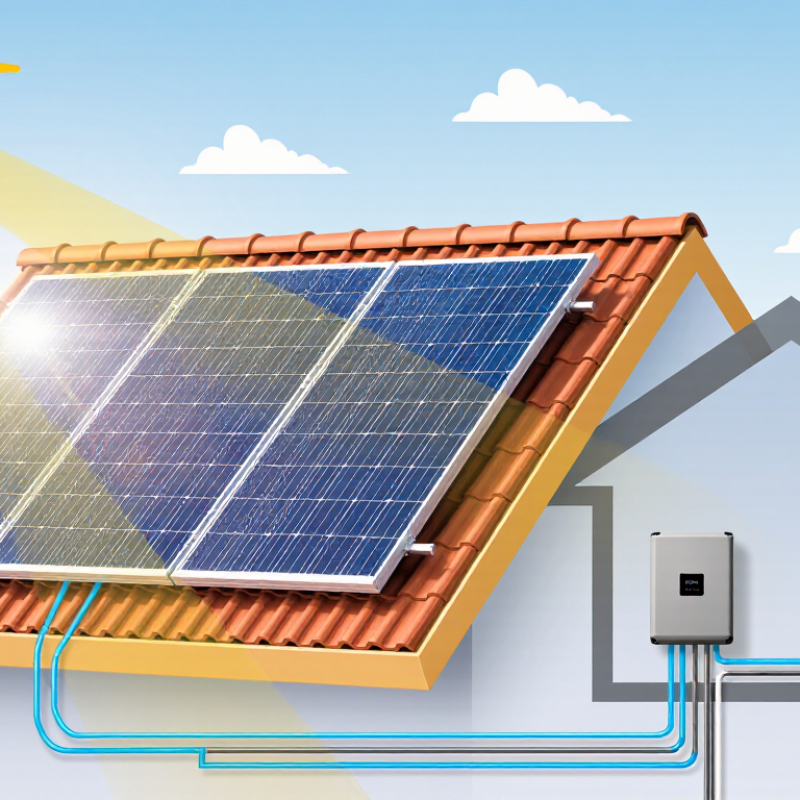
A solar plate is a familiar term in some regions for a flat photovoltaic panel. It captures sunlight and converts it into electricity. The name can be confusing. A plate is not usually a single cell; it is an assembly of connected cells protected by glass and a frame. When sunlight reaches those cells, it excites electrons in semiconductor material, creating direct-current electricity. An inverter can then convert that current into alternating current for many household devices. Simple idea. Careful engineering.
Energy expert Daniel Kammen is often quoted as saying, “The sun provides more energy to the Earth in one hour than the entire world consumes in one year.” That scale is striking, but a solar plate does not collect all available sunlight. Its output changes with location, season, shade, orientation, temperature, and system design. A small shadow from a branch can reduce production, even on a bright afternoon. The details matter.
This introduction explores what a solar plate is, how its cells produce power, and how electricity moves from the roof to a home or battery. It also distinguishes panels from related equipment, such as inverters and mounting hardware. Those terms are easy to blur. Real-world performance deserves equal attention: a panel’s rated output is not a promise of identical daily production. Understanding both the basic science and its limits makes it easier to compare systems, ask better questions, and avoid treating a solar plate as a magic rectangle.
What a Solar Plate Is and What It Does
A solar plate usually means a flat solar panel, though the term is not very precise. Most household plates are photovoltaic modules: layers of silicon cells sealed beneath glass, with wiring and a protective frame. Sunlight energizes electrons inside the cells, producing direct-current electricity. An inverter then converts that current into alternating current for household circuits. On a clear afternoon, the plate may feel warm, but heat is not what powers a photovoltaic system. That distinction is easy to miss.
Some solar plates are thermal collectors instead. They absorb sunlight to heat water or air, often using dark tubing beneath a glazed surface. Both types collect solar energy, but they deliver different outputs. Scale matters, too. IRENA’s Renewable Capacity Statistics 2024 reports that global solar photovoltaic capacity reached about 1,419 gigawatts by the end of 2023, after adding roughly 346 gigawatts that year. That figure describes installed capacity, not electricity produced every hour. Output changes with cloud cover, season, shading, and panel angle. A small shadow from a chimney can reduce performance more than expected. No plate works equally well in every setting.
What Is a Solar Plate and How Does It Work? - What a Solar Plate Is and What It Does
| Topic | Photovoltaic (PV) Solar Plate | Solar Thermal Plate Collector |
|---|---|---|
| What it is | A flat module made of interconnected solar cells that converts sunlight into electricity. “Solar plate” is an informal term; PV module or solar panel is more commonly used. | A flat collector that absorbs sunlight and transfers the resulting heat to a fluid, usually water or a water-and-antifreeze mixture. |
| Main purpose | Produces electrical power for household appliances, buildings, batteries, or the electricity grid. | Heats water or another circulating fluid, commonly for domestic hot water or space heating. |
| Key parts | Solar cells, protective glass, encapsulant, electrical connections, a backing layer, and a supporting frame. | Absorber plate, transparent cover, insulated casing, fluid channels, and inlet and outlet connections. |
| How it works | Light absorbed by semiconductor cells releases charge carriers. The cells produce direct-current electricity, which an inverter can convert to alternating-current electricity. | The absorber captures solar radiation and warms the fluid in its channels. A pump or natural circulation moves the heated fluid to a tank or heat-exchange system. |
| Useful output | Electricity, measured in watts or kilowatt-hours. Output varies with sunlight, temperature, orientation, shading, and system design. | Heat, often measured in kilowatts or kilowatt-hours of thermal energy. Output varies with sunlight, weather, collector temperature, and system design. |
| Typical efficiency context | Many current silicon PV modules have module efficiencies in roughly the 15%–23% range. A module’s rated efficiency is measured under standardized test conditions. | Thermal efficiency depends strongly on operating temperature and conditions. It can be higher than PV electrical efficiency because it captures heat rather than converting sunlight to electricity. |
| Common system equipment | Mounting structure, wiring, inverter or power electronics, and optional battery storage. | Pipes, a storage tank, circulation pump where needed, controller, heat exchanger, and freeze protection where required. |
| What it does not do by itself | A PV plate does not normally store electricity; batteries or the grid provide storage or a supply when generation is low. | A collector does not generate electricity in a typical domestic hot-water system; it supplies heat to a fluid. |
| Choosing the right type | Choose PV when the main goal is generating electricity. | Choose solar thermal when the main goal is heating water or another fluid and the system suits the building’s demand. |
Note: “Solar plate” can refer to different solar devices. Check whether a product is photovoltaic (electricity-producing) or solar thermal (heat-producing) before comparing specifications.
Related Posts
-
Top 10 Solar Energy Panels You Need to Know in 2026?
-
What Are the Best Solar Energy Panels from China?
-
How to Choose the Best Solar Panel for Your Home in 2025
-
Best Solar Panel Options for Global Buyers in 2026?
-
China Top 10 Home Solar Installation Companies?
-
2026 Best Type of Solar Energy Panels for Home?